If you can't see true profit by client, service, and project, you're not managing — you're guessing.
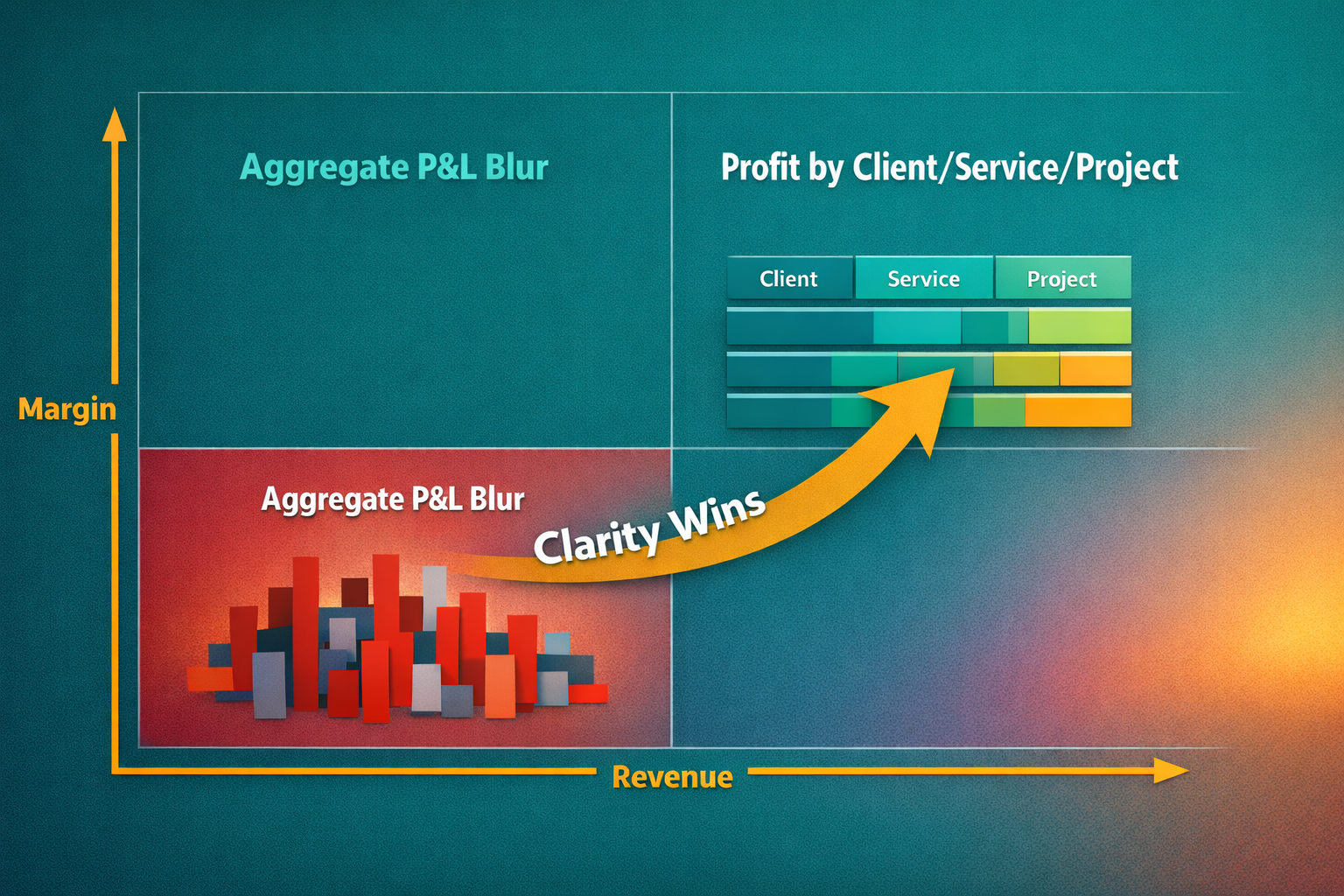
The smartest operators don't chase revenue — they measure reality. Profit by client, service, project. Every time.
If you can't see true profit by client, service, and project, you're not managing — you're guessing.
The smartest operators don't chase revenue — they measure reality. Profit by client, service, project. Every time.
Most firms track revenue, not margin reality. The numbers might look fine in aggregate, but hidden underneath are the profit leaks:
- Over-servicing "good" clients that quietly drain capacity.
- Legacy service lines that create busywork, not value.
- Projects that run red while everyone celebrates "utilisation."
The Profit Visibility Framework
In practice, this gap comes down to measurement clarity and process design, not accounting tricks. Intelligent operators build a system that connects financials, roles, and workflows — creating a business that self-reports where it wins and loses.
What it looks like in practice:
- Client profitability analysis — Know which clients generate real margin, not just revenue
- Service line economics — Understand the true cost and margin of each service you offer
- Project-level tracking — See profit and loss at the project level in real time
- Capacity utilisation — Measure how effectively your team's time converts to billable, profitable work
- Pricing confidence — Set prices based on actual cost data, not gut feel
The payoff? Leaders can make better calls — trimming deadweight services, re-pricing with confidence, and investing in work that actually scales.
Where in your business are you still making margin decisions based on gut feel?