Tech is No Longer the Bottleneck. The Bottleneck is Clarity.
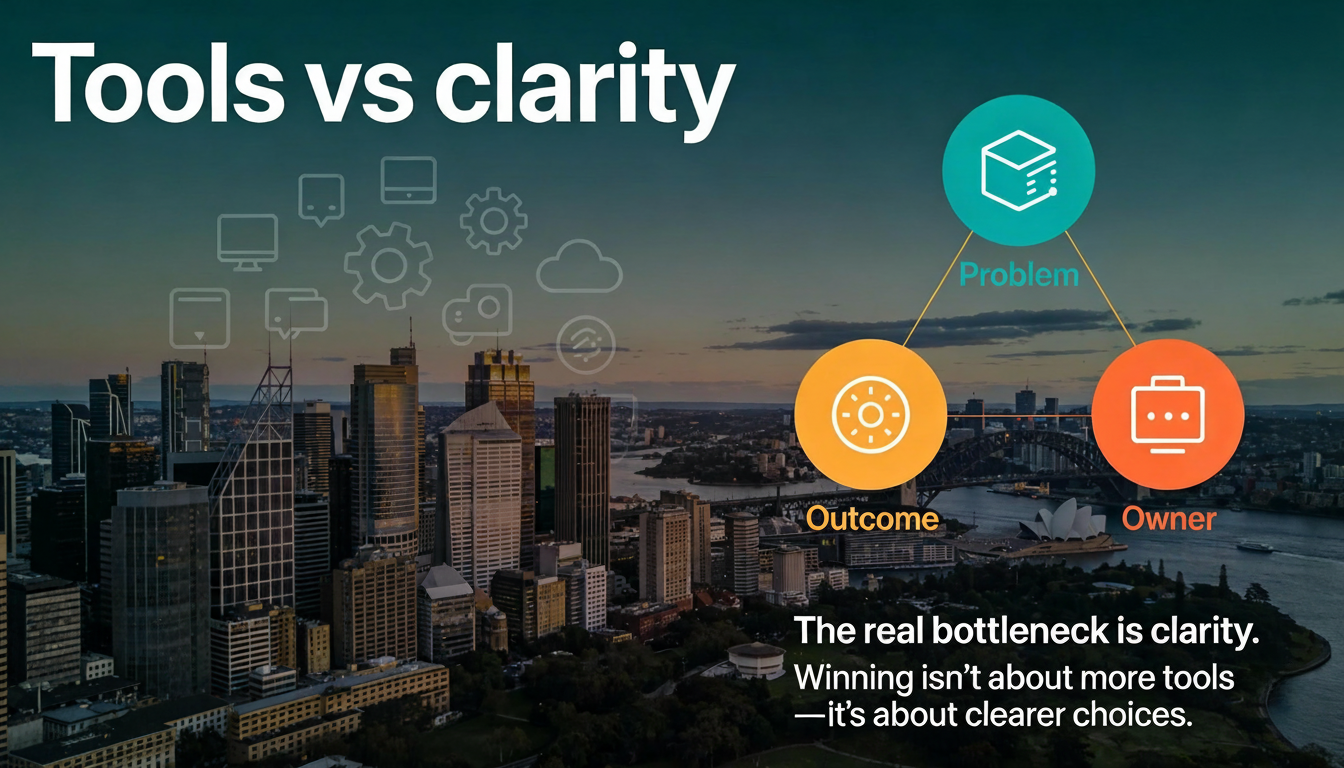
The winners over the next 3-5 years won't be the ones with the most AI, the biggest tech stack, or the flashiest dashboards. They'll be the ones with a simple, lived framework for choosing problems and defining outcomes.
Tech is no longer the bottleneck. The bottleneck is clarity.
The winners over the next 3–5 years won't be the ones with: The most AI, The biggest tech stack, The flashiest dashboards.
They'll be the ones with a simple, lived framework for choosing problems, defining outcomes, and aligning people.
We redesigned the process flows and product mix of an online news publisher. All before implementing the publishing systems to support the process. That news agency went from 1 publication with 6 stories a week to 5 publications with 8 stories a week.
The organisations that win aren't the ones with the most tools — they're the ones that can say, in plain language, "Here's the business problem, here's how we'll know it's fixed, and here's who owns each step on Tuesday morning."
In operations-heavy businesses, the pattern is painfully familiar: tools get bought, dashboards get built, but front-line reality doesn't move much. Workarounds survive, decisions still depend on the same 3 people, and leaders are drowning in noise instead of getting a clear line of sight to value, risk, and capacity.
The organisations that quietly pull away do something different:
-
They choose the right problems by first diagnosing where value, profit, and time are actually leaking — not where the loudest stakeholder is
-
They translate those problems into measurable outcomes: faster turnaround, fewer incidents, more first-time-right work, better utilisation of their best people
-
They design strategy, structure, processes, and roles so the work can run end-to-end without constant heroics or escalation, before they commit to any big automation or IT spend
In one news publishing environment, the real unlock wasn't a new system — it was redesigning how editorial decisions were made, standardising copywriting, review and approval work and redesigning publication's content mix so publishing systems had 5x as much content, leading to big gains in stories published, audience numbers and views. Once that backbone was in place, intelligent, integrated systems could actually do their job.
That same playbook works for $2m–$15m operations: consulting first, tools second; clarity on value and roles first, then AI, automation, and integration to lock it in.
In your organisation today, is technology leading the conversation — or is a clear, commercial definition of the problem leading, with tech following?